


✦ New · GGC Digital Teacher Planner
The planner that plans the way a teacher does.
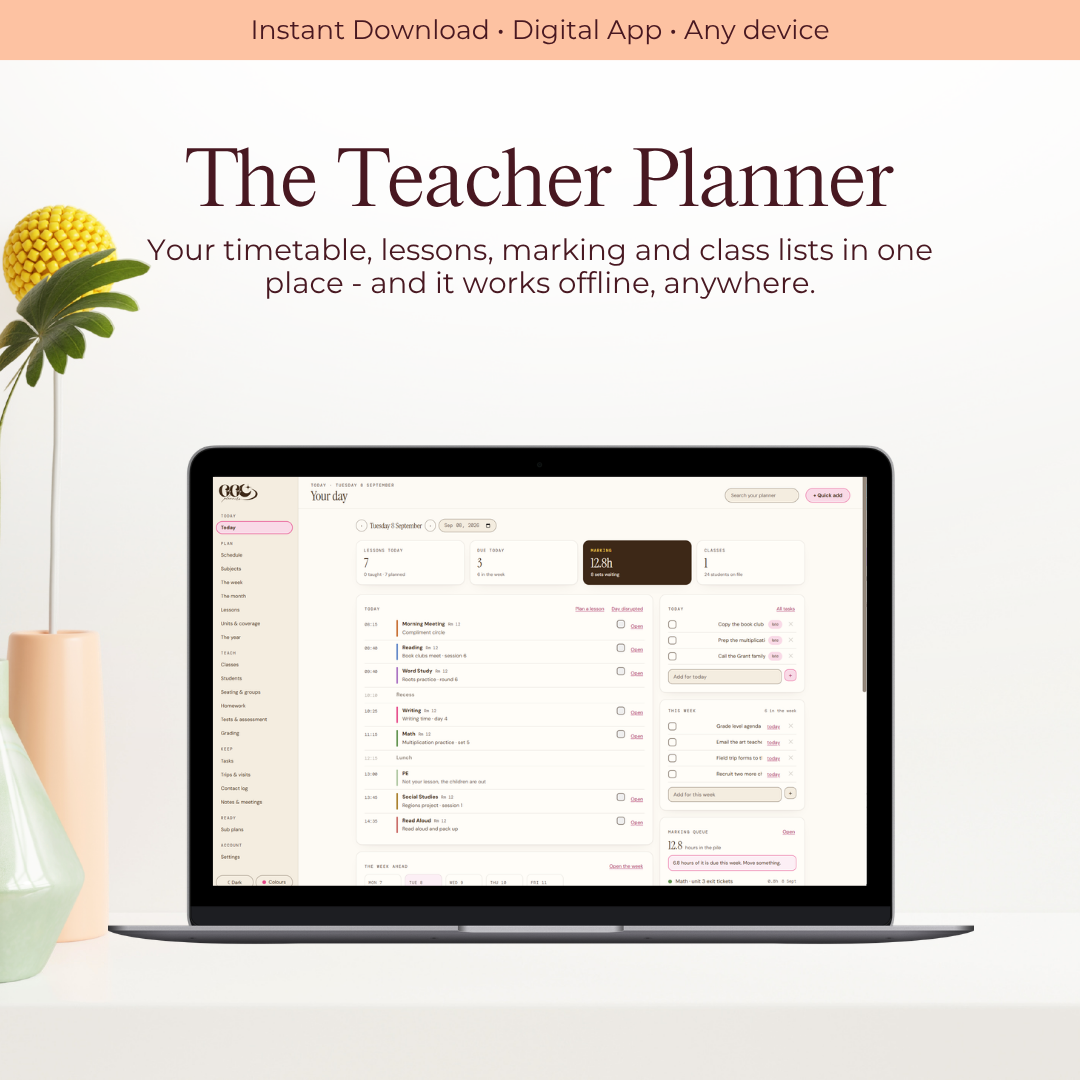
Timetable, lessons, marking, homework, seating and the day's cover in one planner you sign into. Open it in the morning and it tells you exactly what today needs.
Sound familiar
You plan all Sunday, and still walk in feeling behind.
You are not disorganised. You are holding a whole school week in your head: who has handed what in, whose slip is missing, which lesson got bumped, and what you are teaching first thing tomorrow.
The one minute setup
Fill your timetable in once. Everything reads from it.
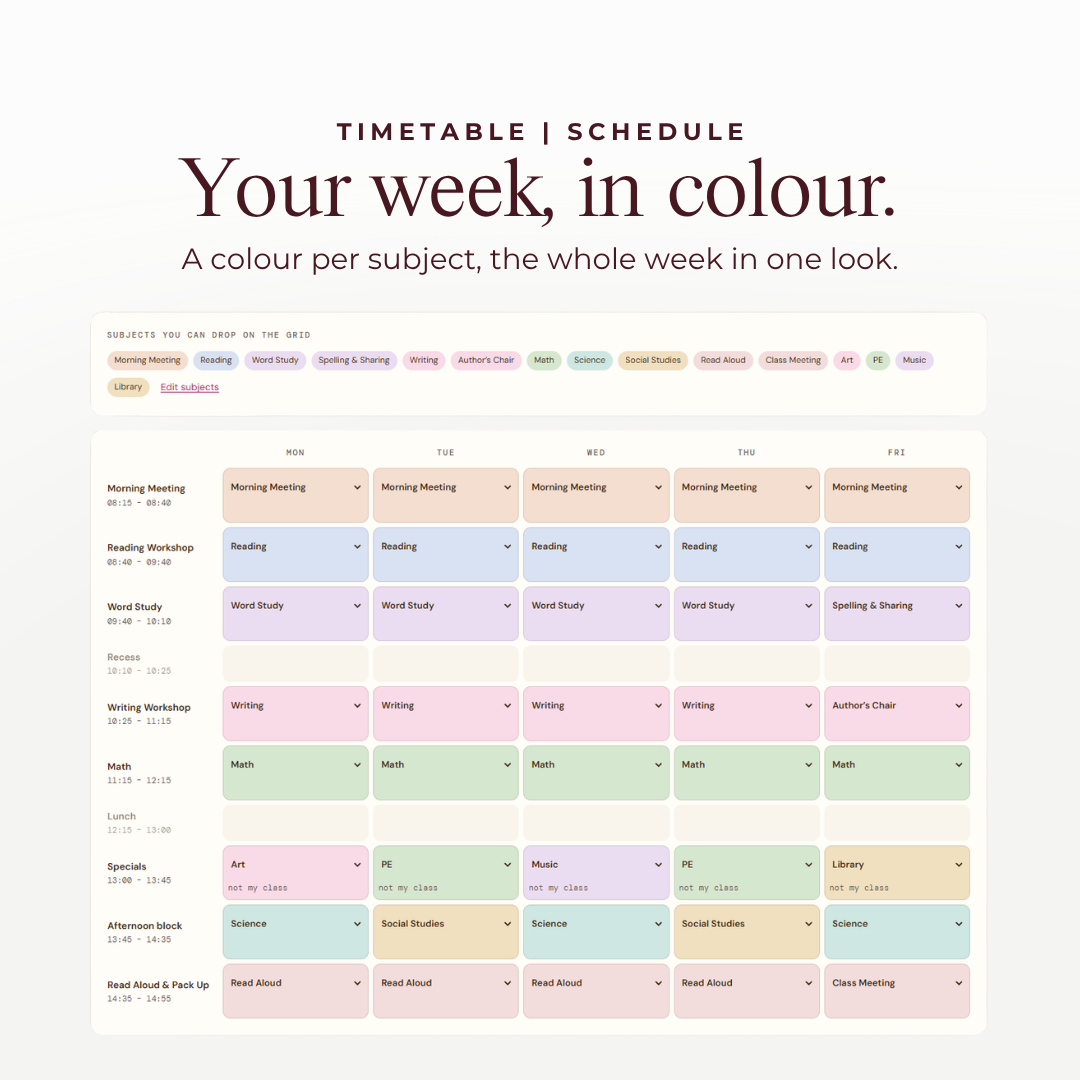
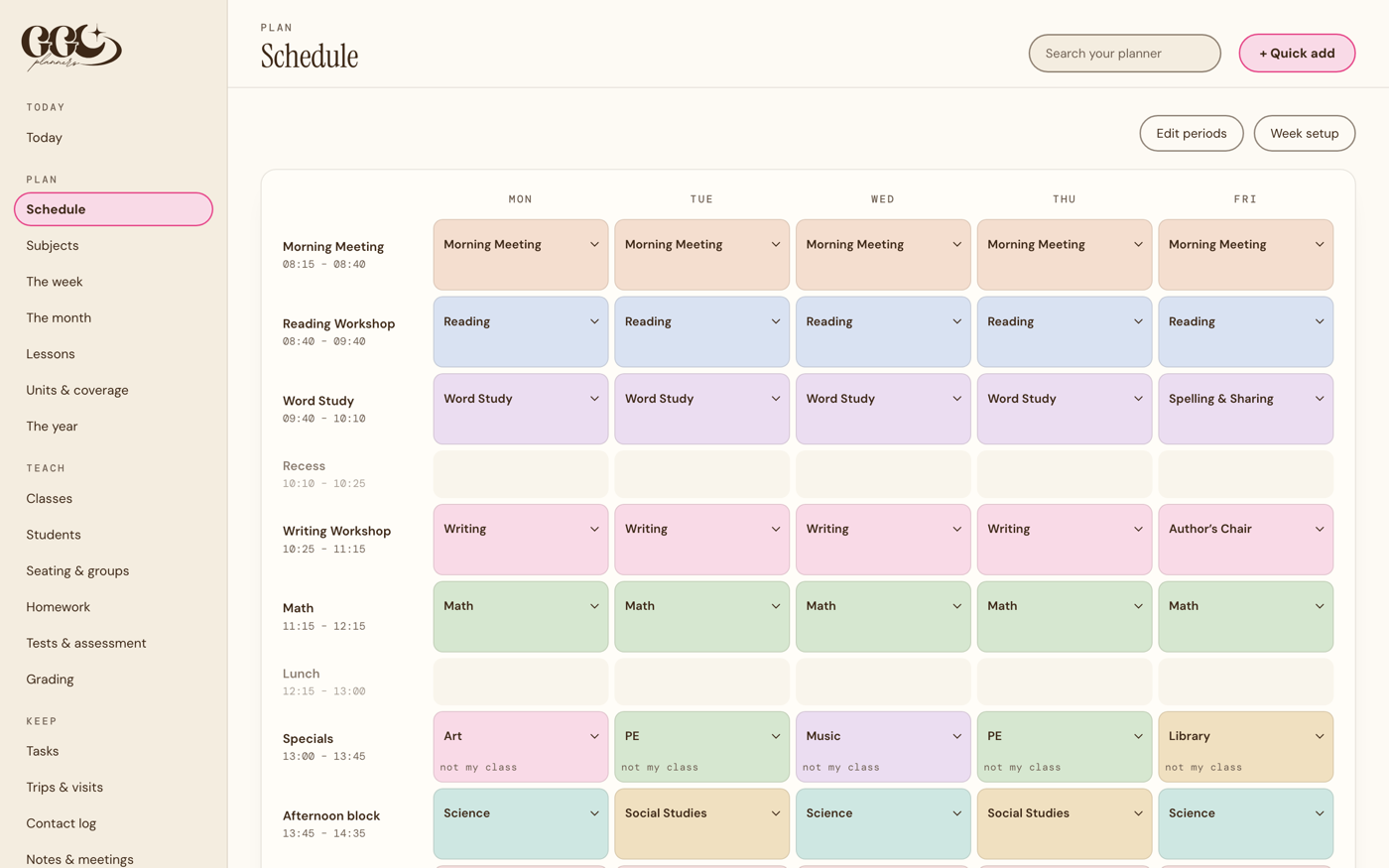
Name your periods or blocks, drop your classes and subjects into the grid, and you are done typing. The day, the week, the month, the marking forecast and the cover pack all read from that one grid. You never enter the same thing twice.
What a paper planner cannot do
The parts that save a Sunday.
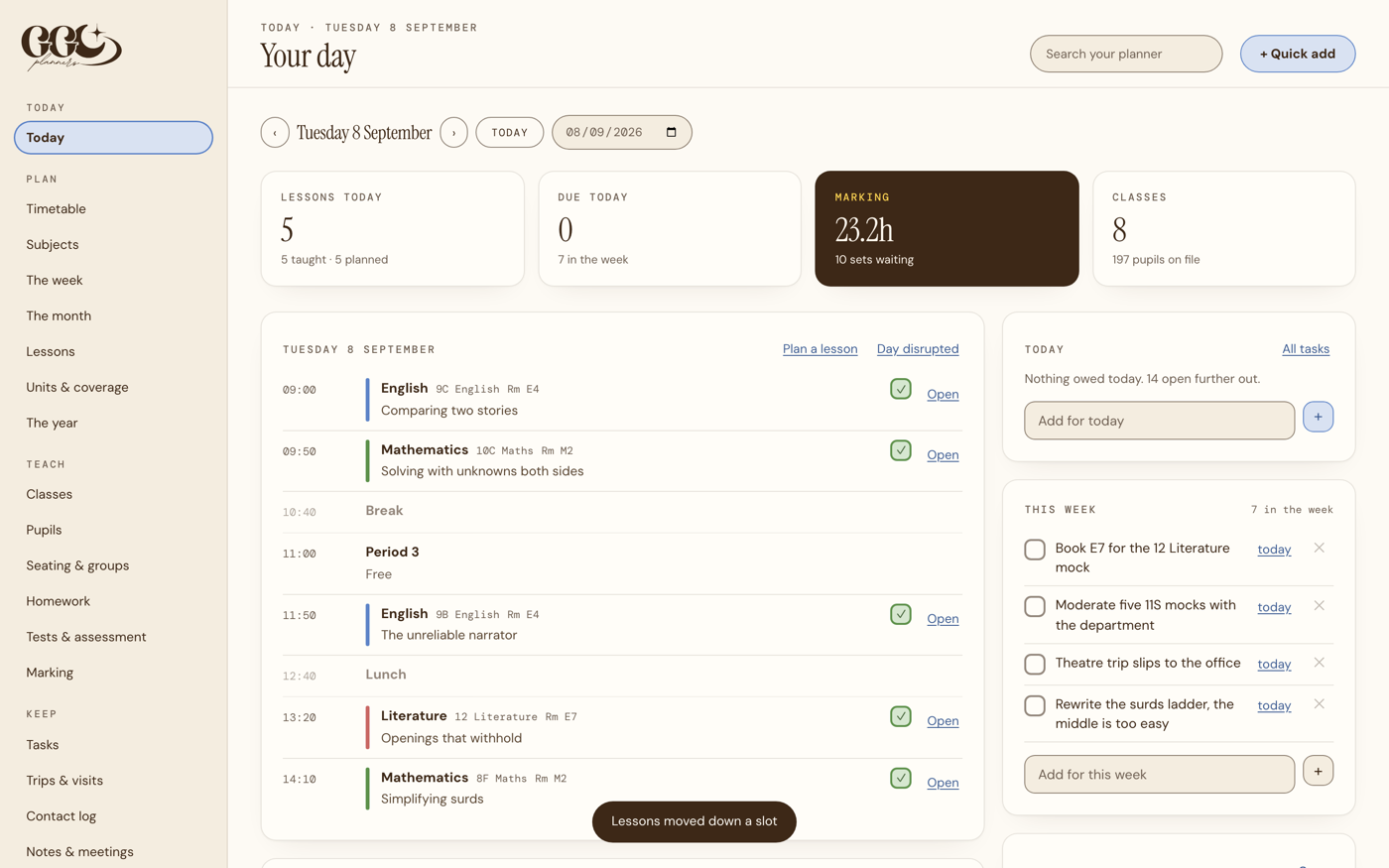
One tap reshuffles the week
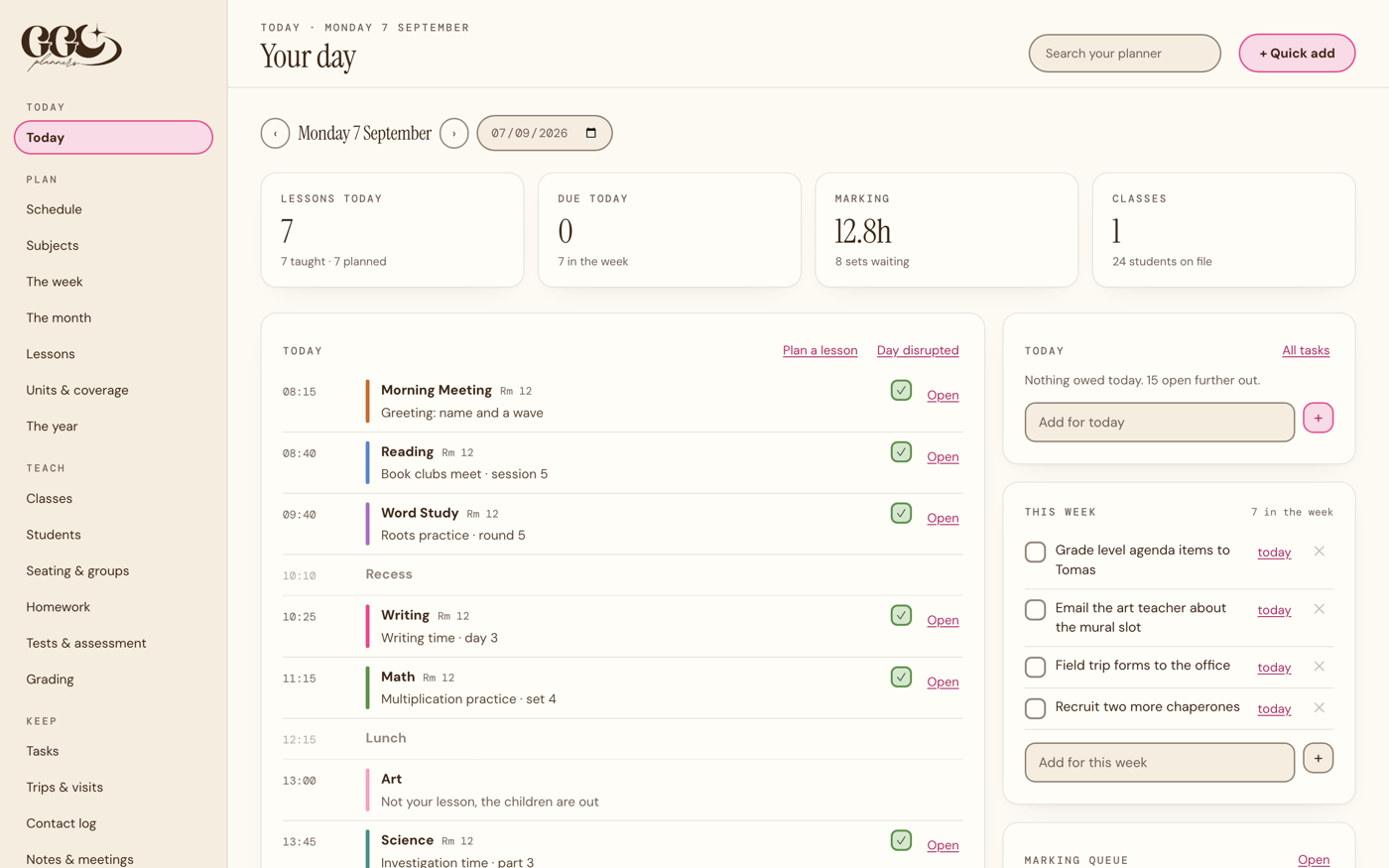
Fire drill, assembly, half the class at a match. One tap and everything not yet taught slides down a slot, in order, right through to Friday. What you already taught stays exactly where it is. In a secondary planner it moves one class down its own timetable and leaves the others alone.
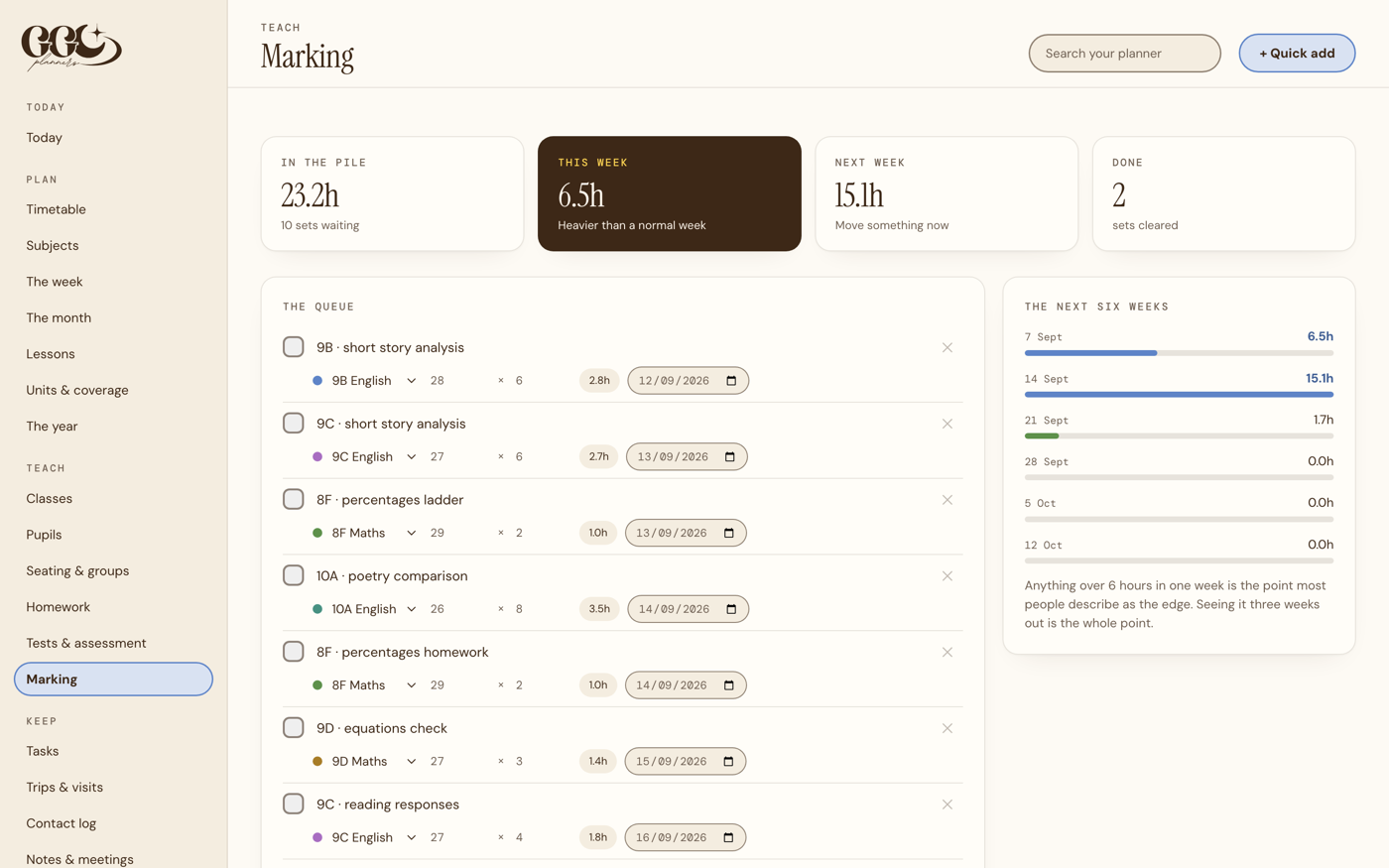
Marking, measured in hours, six weeks ahead
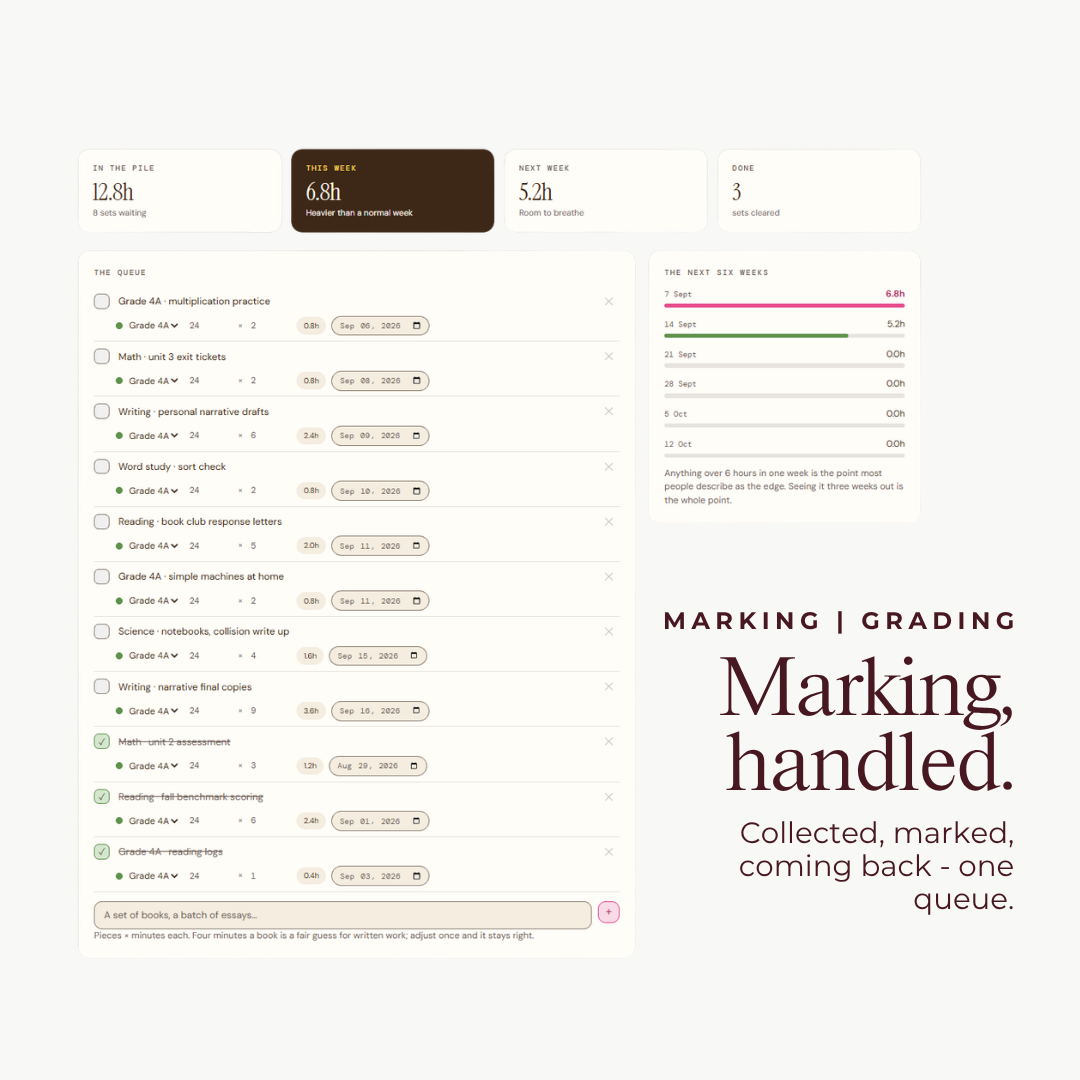
A pile of books becomes a number of hours. The fortnight that is going to hurt shows up while there is still time to move something. Move one collection date and watch it flatten.
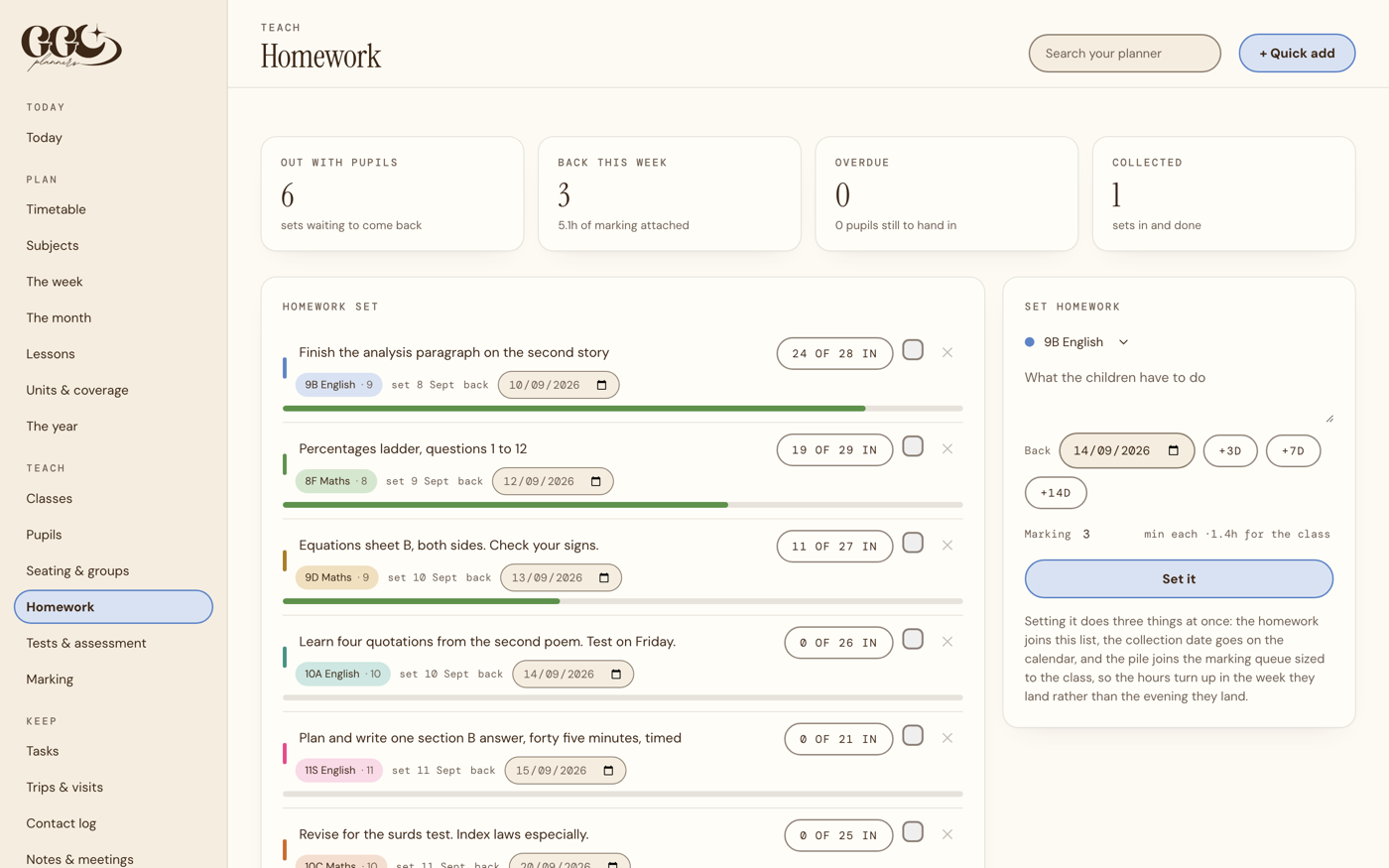
Homework, by name
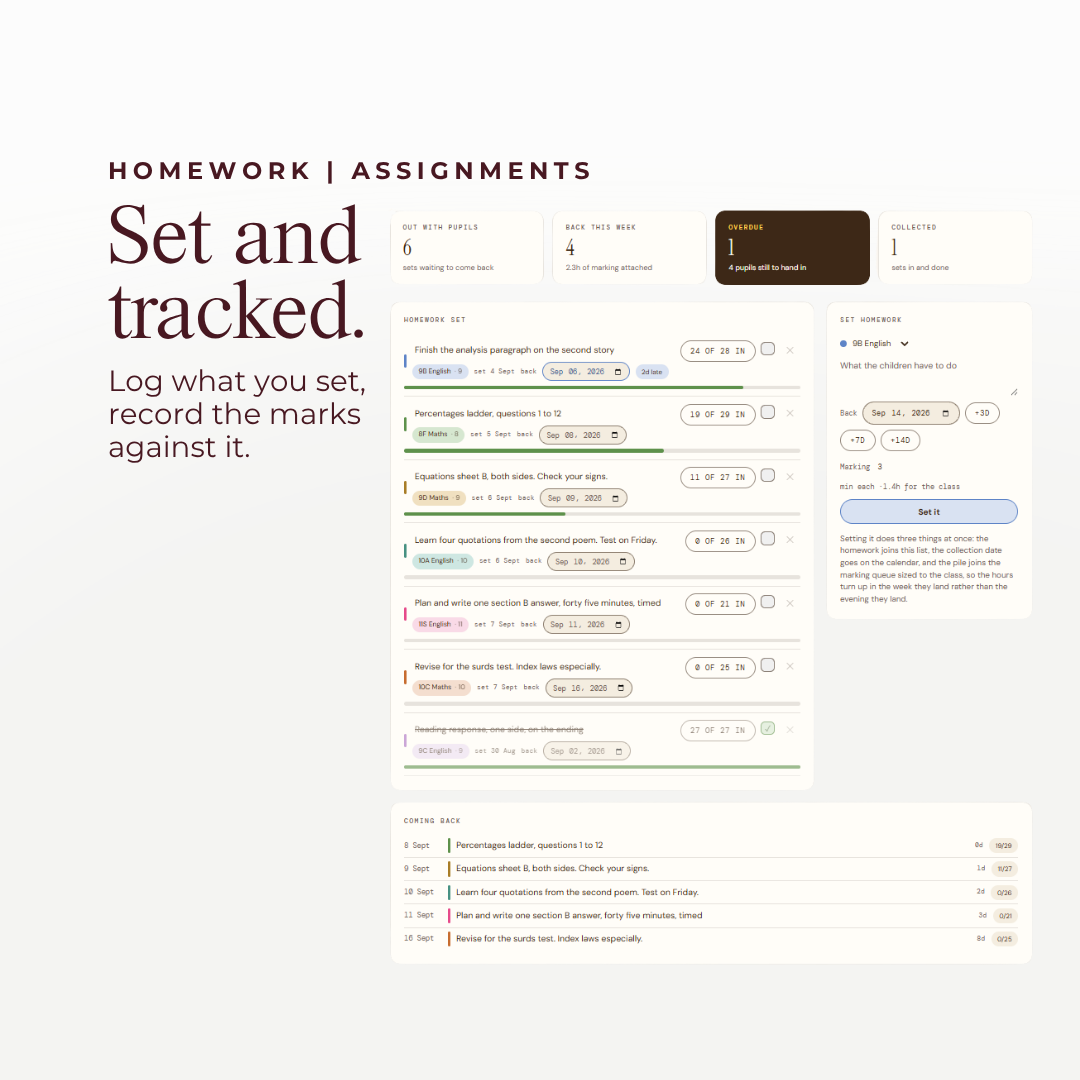
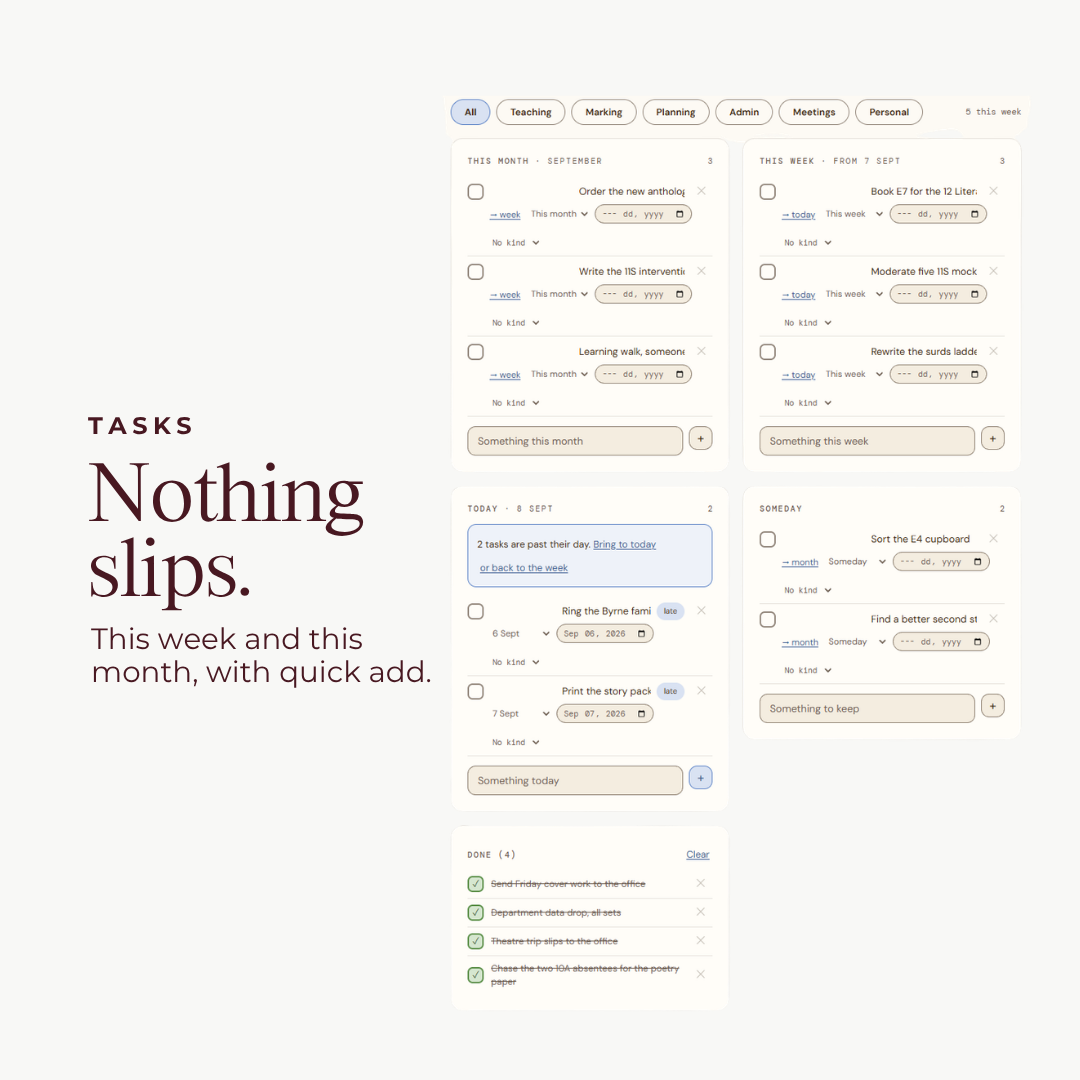
Set it once and three things happen together: it goes on the list with a tick beside every student, the date lands on the calendar, and the marking joins the pile sized to the class. You always know exactly who has not handed in, and one tap puts those names on today's list.
The whole day, printed for whoever covers you
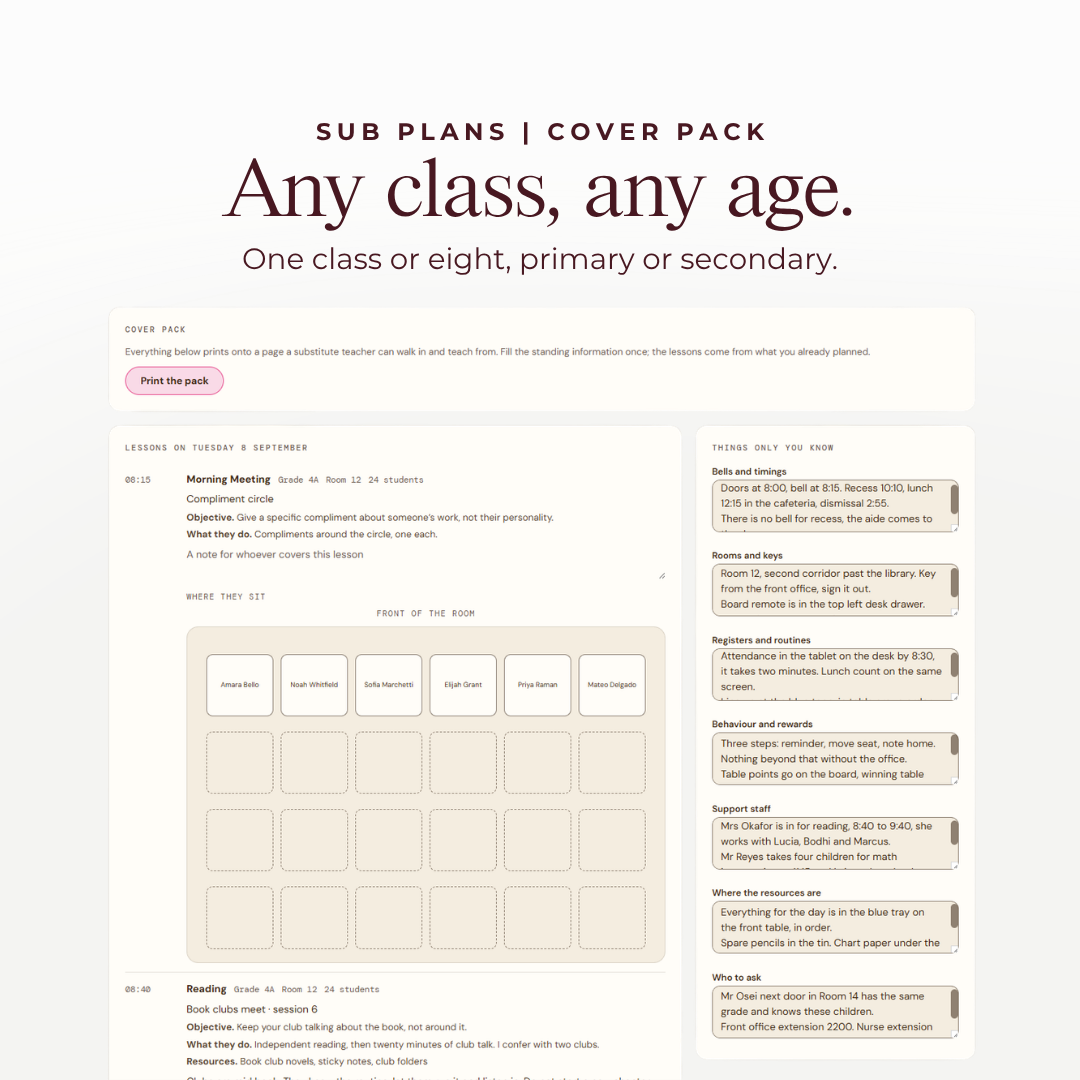
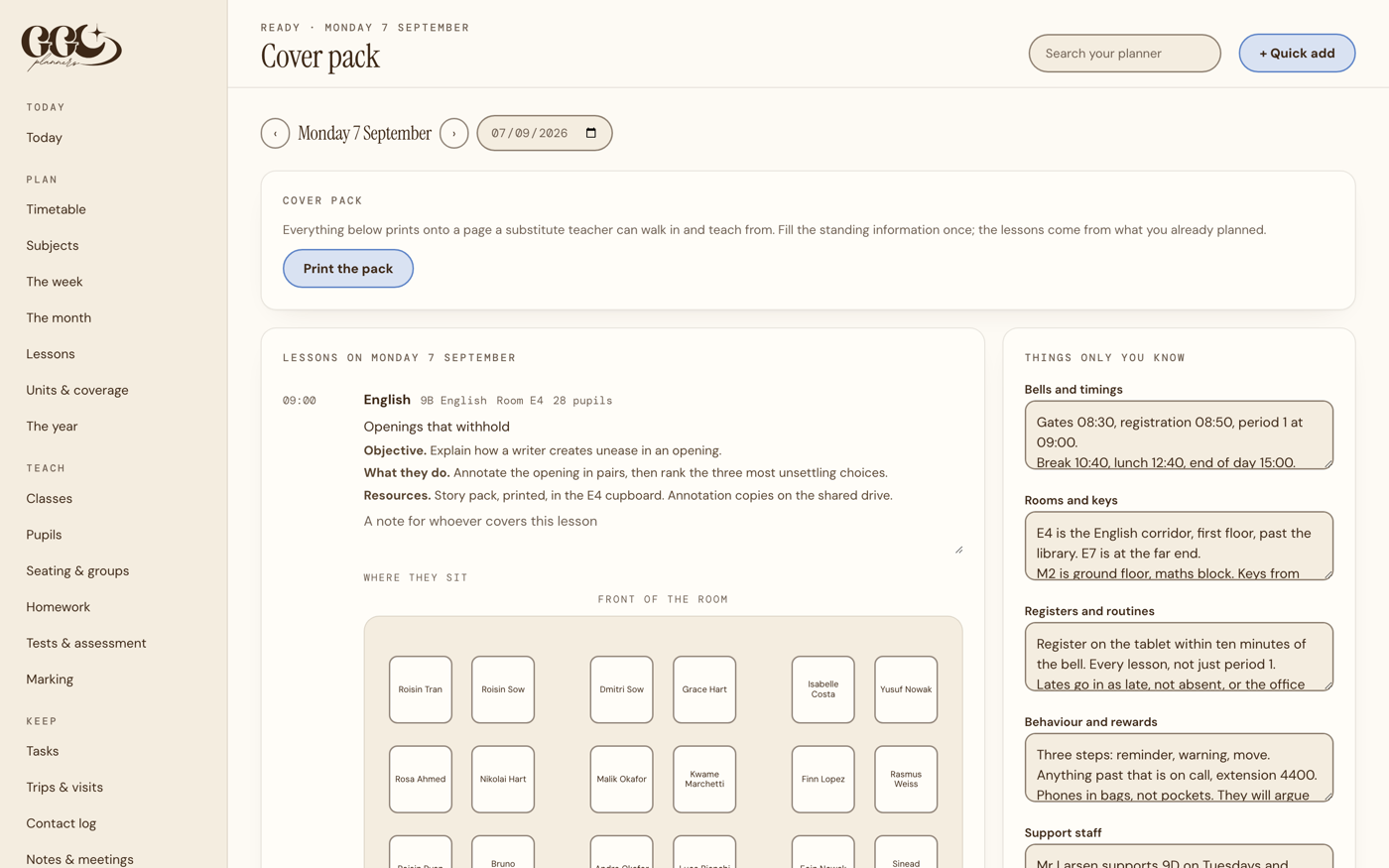
One button prints your lessons, your rooms, the seating chart with names on the desks, and the things only you know about that class. Cover pack, or sub plans, whichever your school calls it.
One product, three shapes
Built for how you actually teach.
It asks one question at the start: primary or secondary. Then it takes the right shape, including if your week is not a week.
Primary and elementary
One class, all day. Named blocks with a subject on every slot, one class list you know by heart, six subjects planned in one view.
Secondary and high school
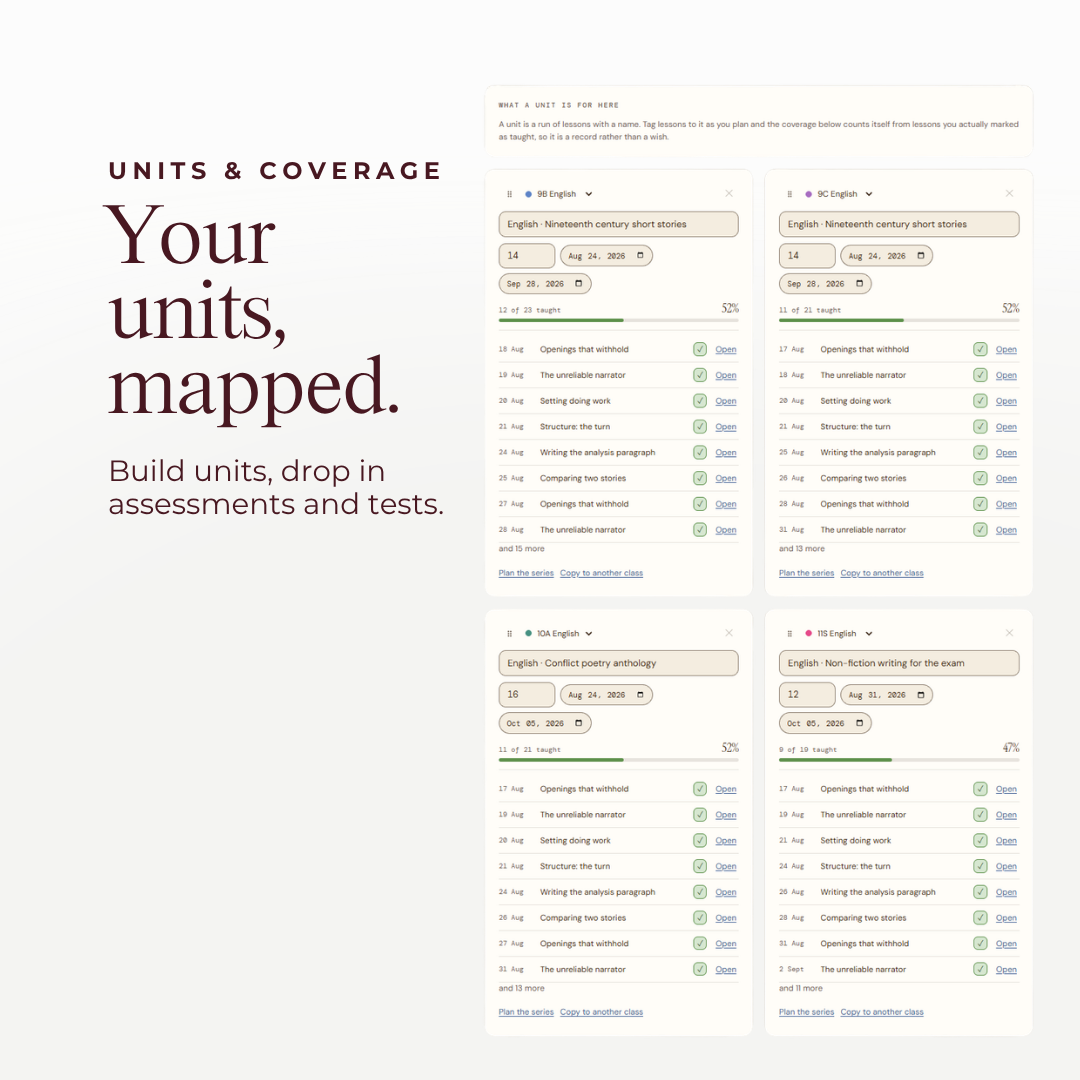
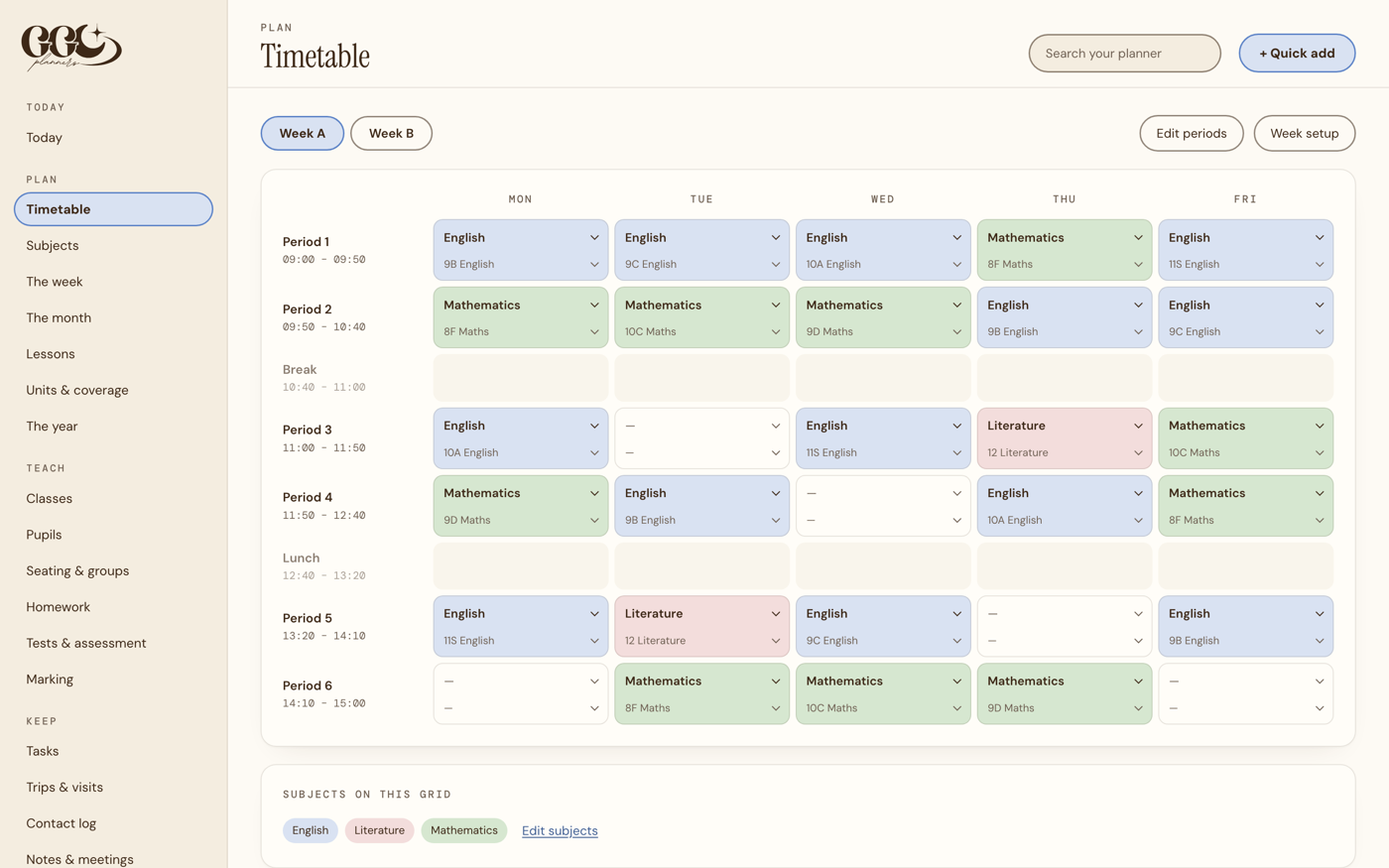
Eight classes that must not drift apart. Numbered periods, a colour per class, marking that arrives in waves, and Week A and Week B if your school runs a two week cycle.
Schools on a rotating cycle
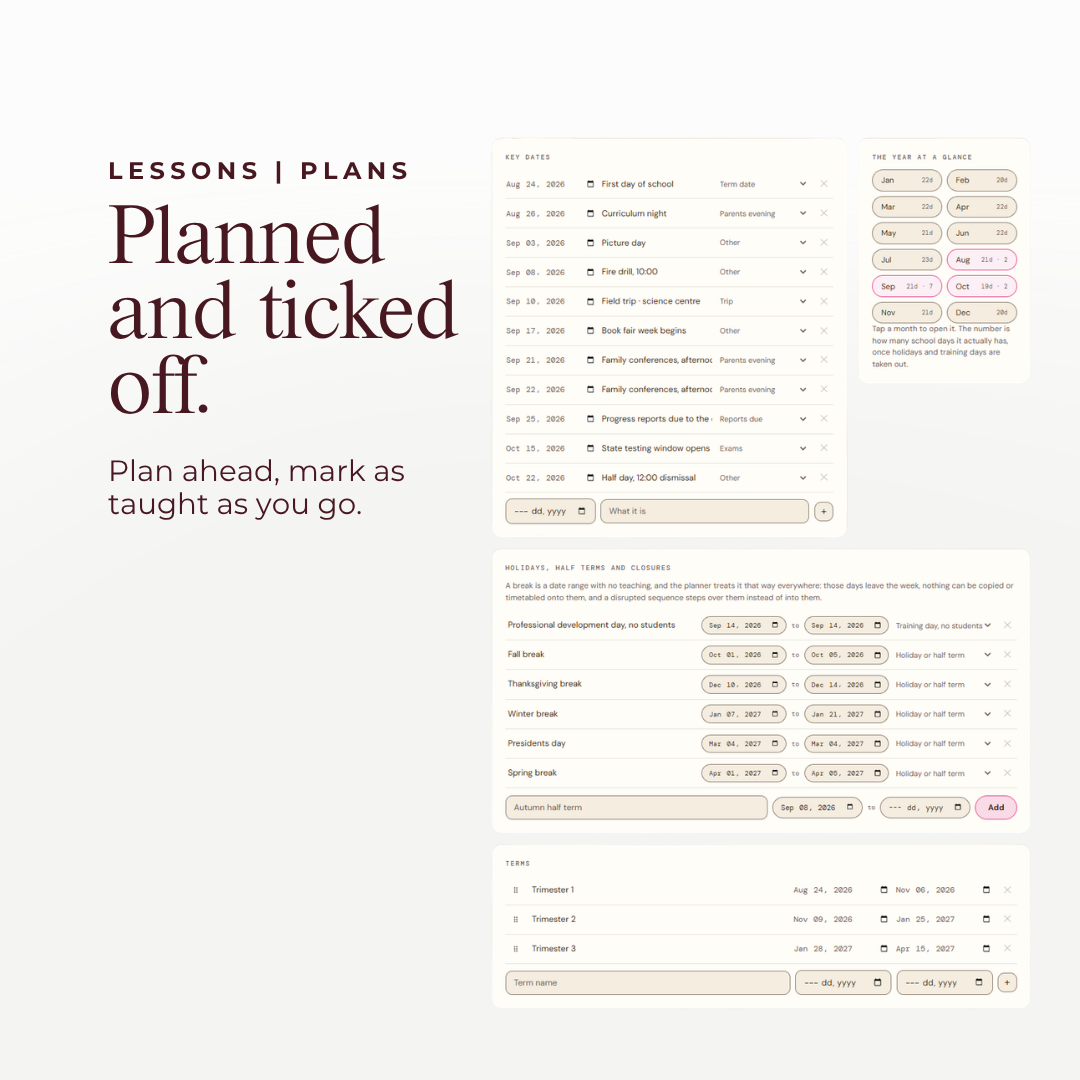
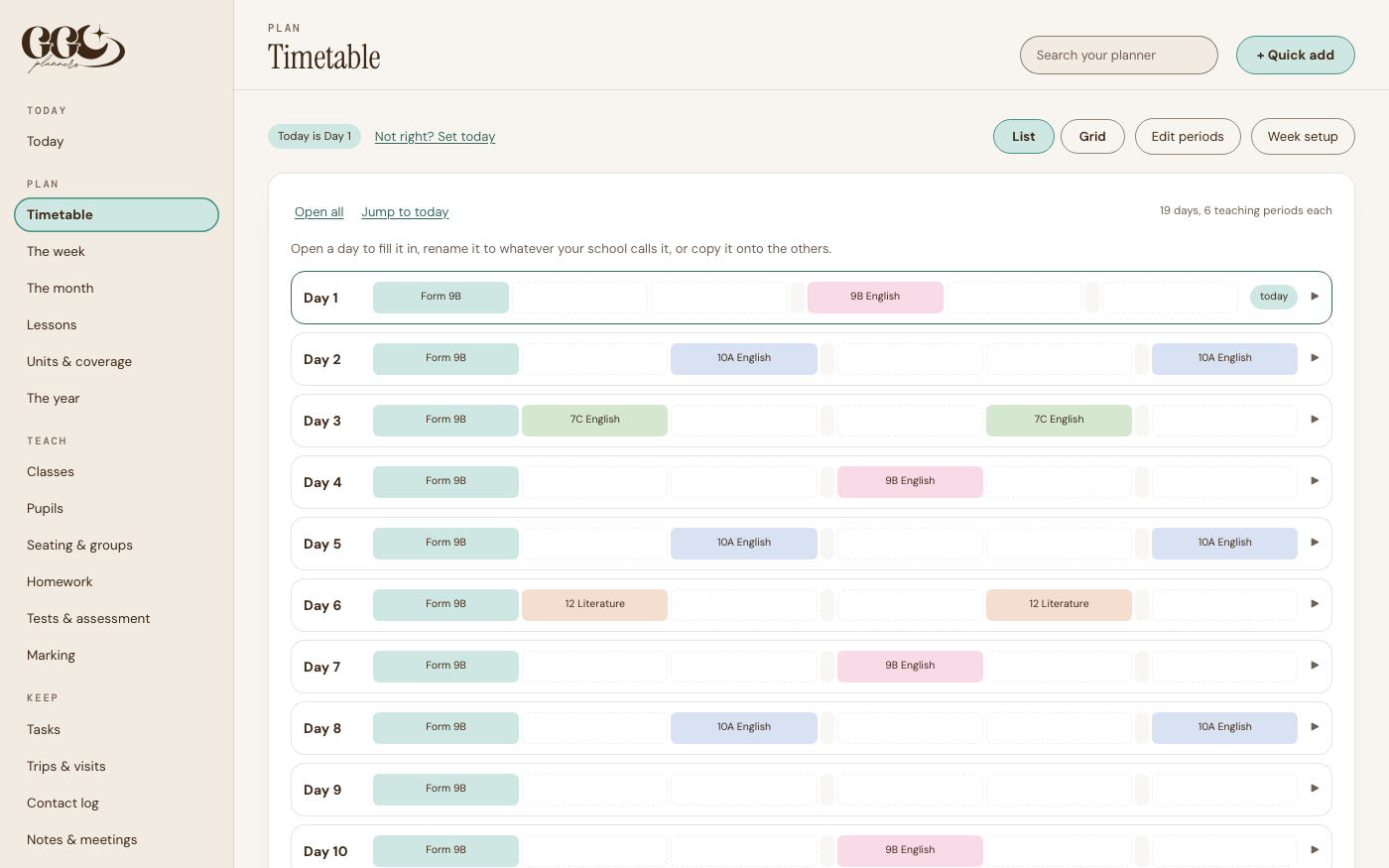
Day 1 to Day 6, A day and B day, or anything up to 19 days. You give it the cycle length and the date Day 1 fell on, once. It counts on from there over weekends, half terms and training days, so it never drifts out of step with your school.
Seating plans
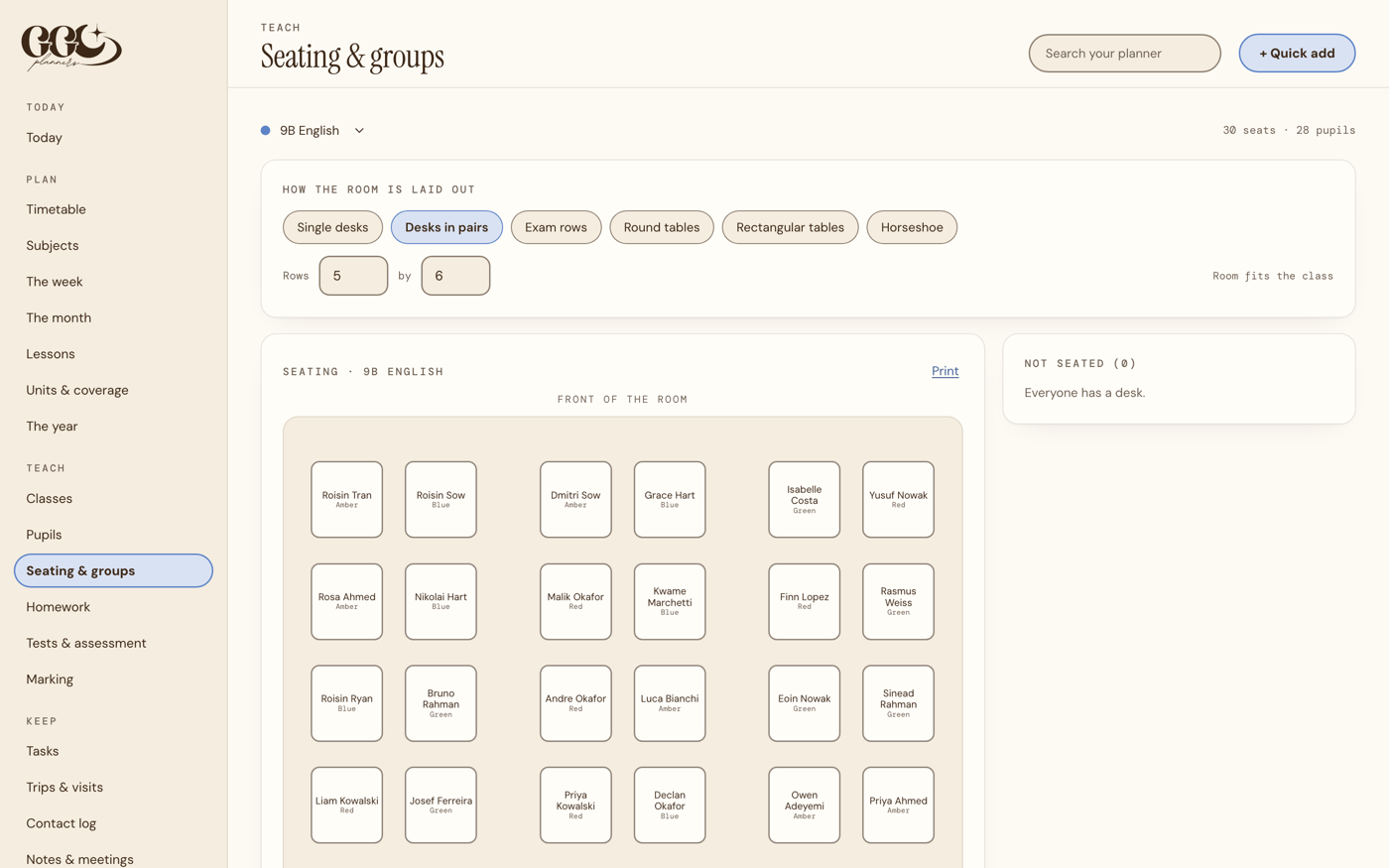
The room, the shape it actually is.
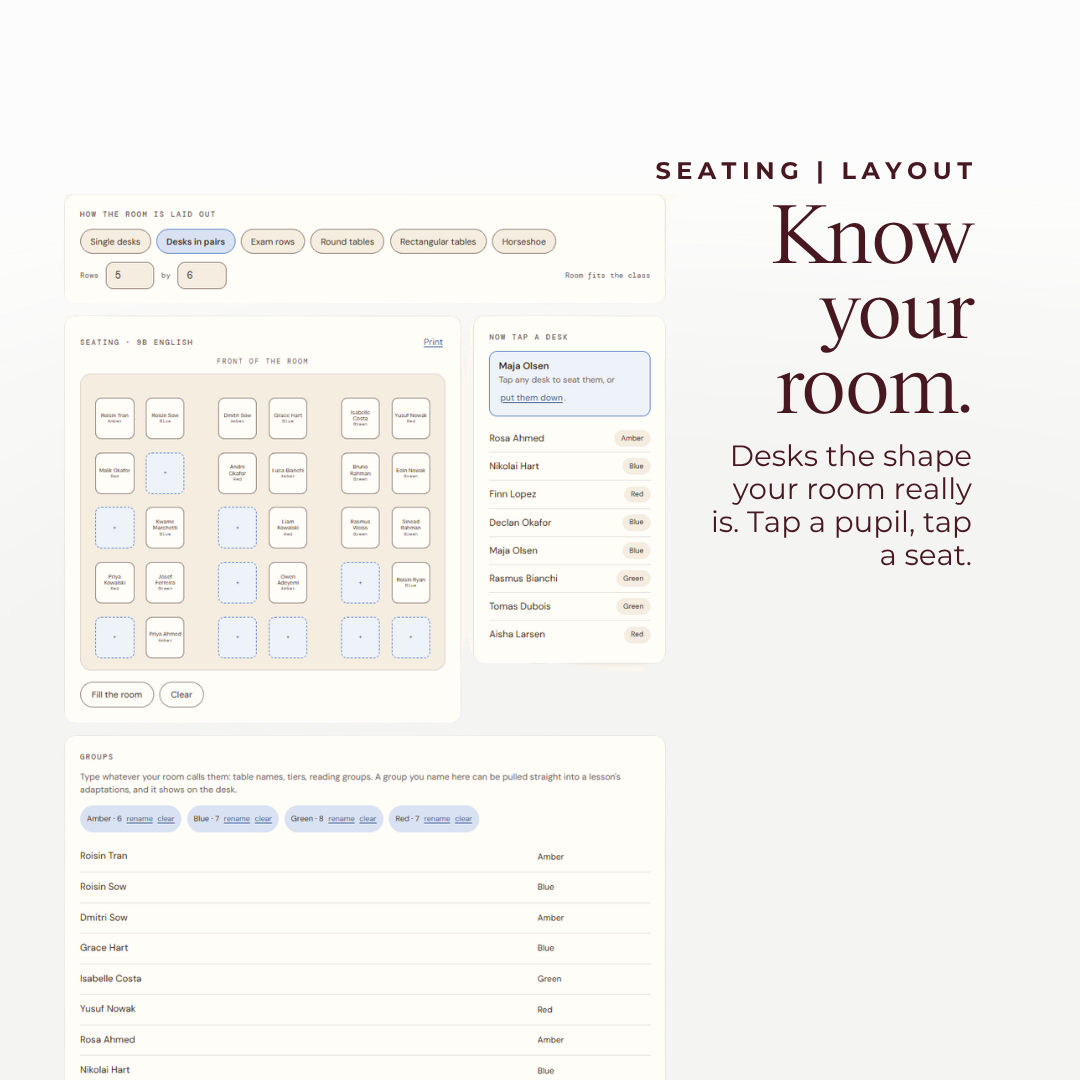
Seat everybody in one go, move one child with a tap, print it for the cover pack. No PDF planner can do this.
The rest of the job
What else is in it.
The practical bit
Any device. Offline. Yours.
Reviews
Teacher reviews land here after the first term
We are launching, so there are none yet and we will not invent any. GGC has shipped over 100,000 planners; this is the first one you sign into.
Questions
The things you are probably wondering.
No. It is a web page you sign into, and you can add it to your home screen so it opens full screen like an app. Nothing to install and nothing to update.
Yes, and it syncs between your devices. It is best on a laptop or desktop, because the timetable and the seating plans want a full screen. Build your week on a computer once, then the day to day is quick from anywhere.
No. You buy it once.
Yes. It uses your country's words automatically and you can change them in Settings. Nine countries have their own vocabulary and everywhere else gets a neutral setting. No feature is limited by where you teach.
Yes. Choose a rotating cycle in Week setup, say how many days are in it, anywhere from 2 to 19, and give it the date Day 1 fell on. It counts on from there for the rest of the year, straight over weekends, half terms and training days, so it cannot drift. You choose whether an unexpected closure pauses the cycle or skips that day, and you can rename the days to whatever your school calls them.
Yes. Paste the address into a lesson and it becomes one tap from your day, your plan and your cover pack. It names them for you, so a folder shows as Google Drive and a deck as Google Slides. Docs, Sheets, Forms, Classroom, YouTube, OneDrive and PDFs too. On paper they print as the full address, so whoever covers you can still find them.
It is built for both, and it asks you which at the start. A primary planner is named blocks with a subject on every slot. A secondary one is numbered periods, several classes and an optional two week cycle.
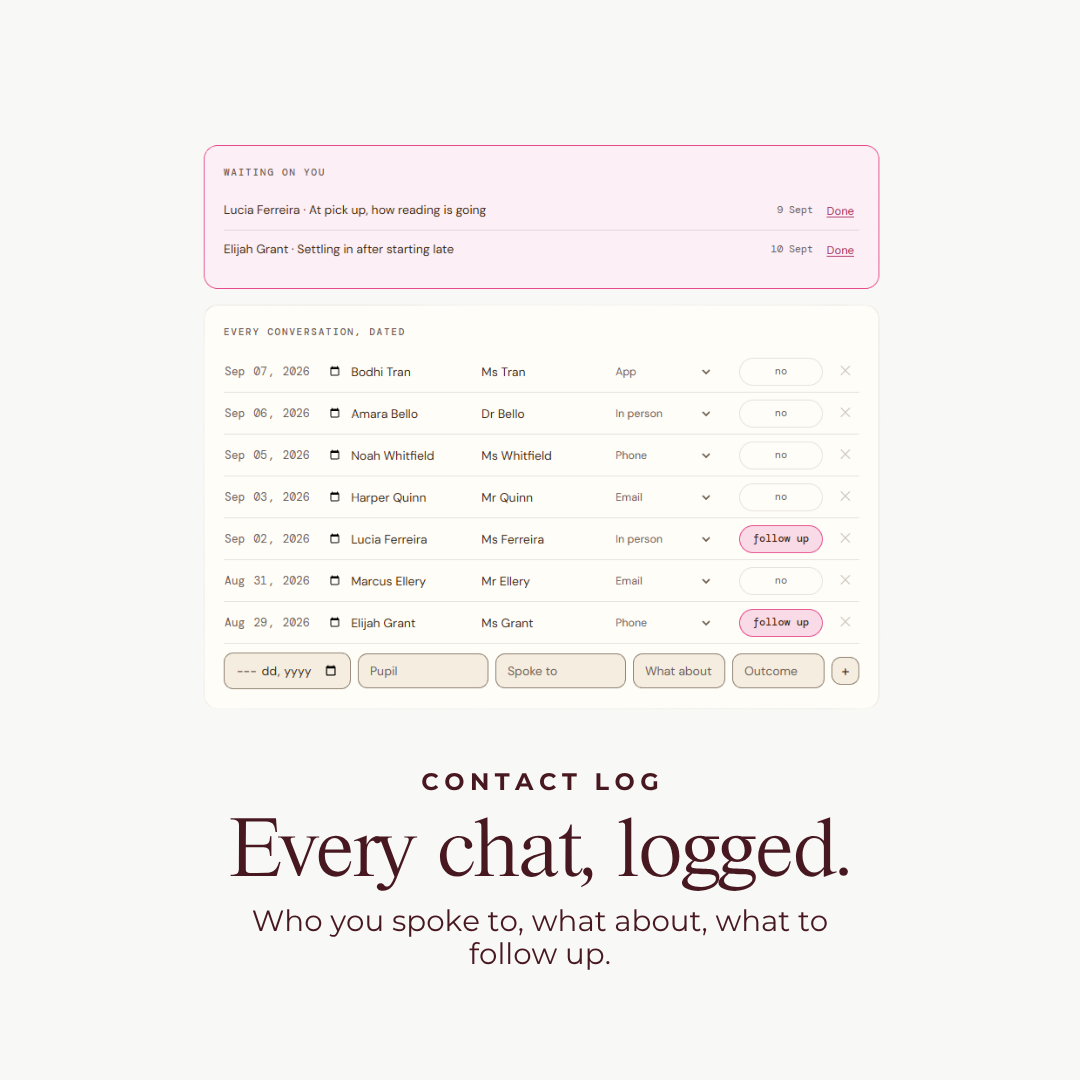
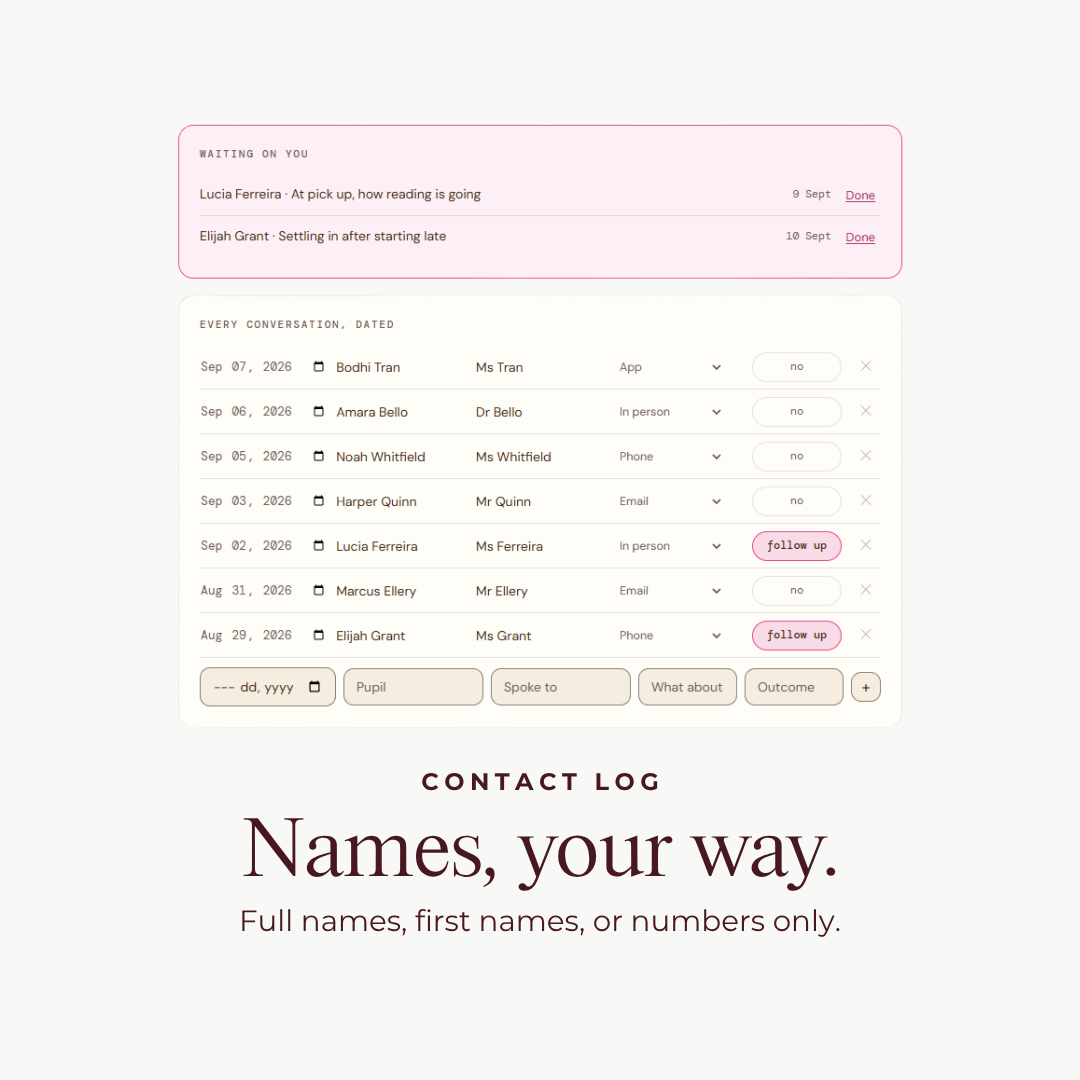
Yes, and if your school would rather you did not, you can show every student as a number instead. Either way it deliberately does not hold medical, dietary or behaviour records. Those belong in your school's own system.
Not any more. The planner used to need a second web address, and some school filters block it, which is why a few teachers saw an error on a school laptop. It now runs entirely from its own address, so if your school lets you open it, it works. Nothing for your IT team to approve. It also saves on your own device first, so it keeps working with no connection either way.
It is yours to keep. Download a backup any time. And when a new term starts there is a button for it: name the term, give it dates, and it clears out what last term finished with while keeping your timetable, your classes and every lesson you taught.
Yes. Signing out clears your planner from that machine.
One last thing
Open one thing, know what today needs.
Fill your timetable in once, then spend the rest of the term reading it instead of rewriting it.